“All Their News,
Made Fit to Print”

Byadmin
Trump, Xi and Putin hold their first three-way summit; Trump’s spy chief called the “friend” label “entirely appropriate” and said Putin is “not America’s friend in Ukraine,” and headlines picked a half
Updated Nov. 23: DNI Jay Clayton said Trump calling Putin a “friend” was “entirely appropriate” and that Putin is “not America’s friend in Ukraine.” Of 36 headlines, 19 led with the second half and 15 with the first; four dropped “in Ukraine,” and Mediaite said he “rejects” Trump.
Trump, Xi and Putin hold their first three-way summit; Trump’s spy chief called the “friend” label “entirely appropriate” and said Putin is “not America’s friend in Ukraine,” and headlines picked a half
Created: 2026-11-19T06:46:15-05:00 (America/New_York)
Last updated: 2026-11-23T06:44:40-05:00 (America/New_York)
Day 4 in the news · first ran Nov. 19 · off Nov. 22
Updated Nov. 23: DNI Jay Clayton said Trump calling Putin a “friend” was “entirely appropriate” and that Putin is “not America’s friend in Ukraine.” Of 36 headlines, 19 led with the second half and 15 with the first; four dropped “in Ukraine,” and Mediaite said he “rejects” Trump.
The short version
Trump, Xi and Putin met in China last week for their first three-way summit, and Trump called Putin his “friend.” On ABC’s “This Week” Sunday, Director of National Intelligence Jay Clayton said the word was “entirely appropriate” in the context of three nuclear powers agreeing to avoid a nuclear incident, then said Putin “is not America’s friend in Ukraine. Not at all.”
Of 36 headlines in a Google News search Monday, 19 led with “not America’s friend” and 15 with “entirely appropriate” or Clayton defending Trump; only 2 carried both. Four dropped “in Ukraine,” and Mediaite said Clayton “rejects” Trump’s word.
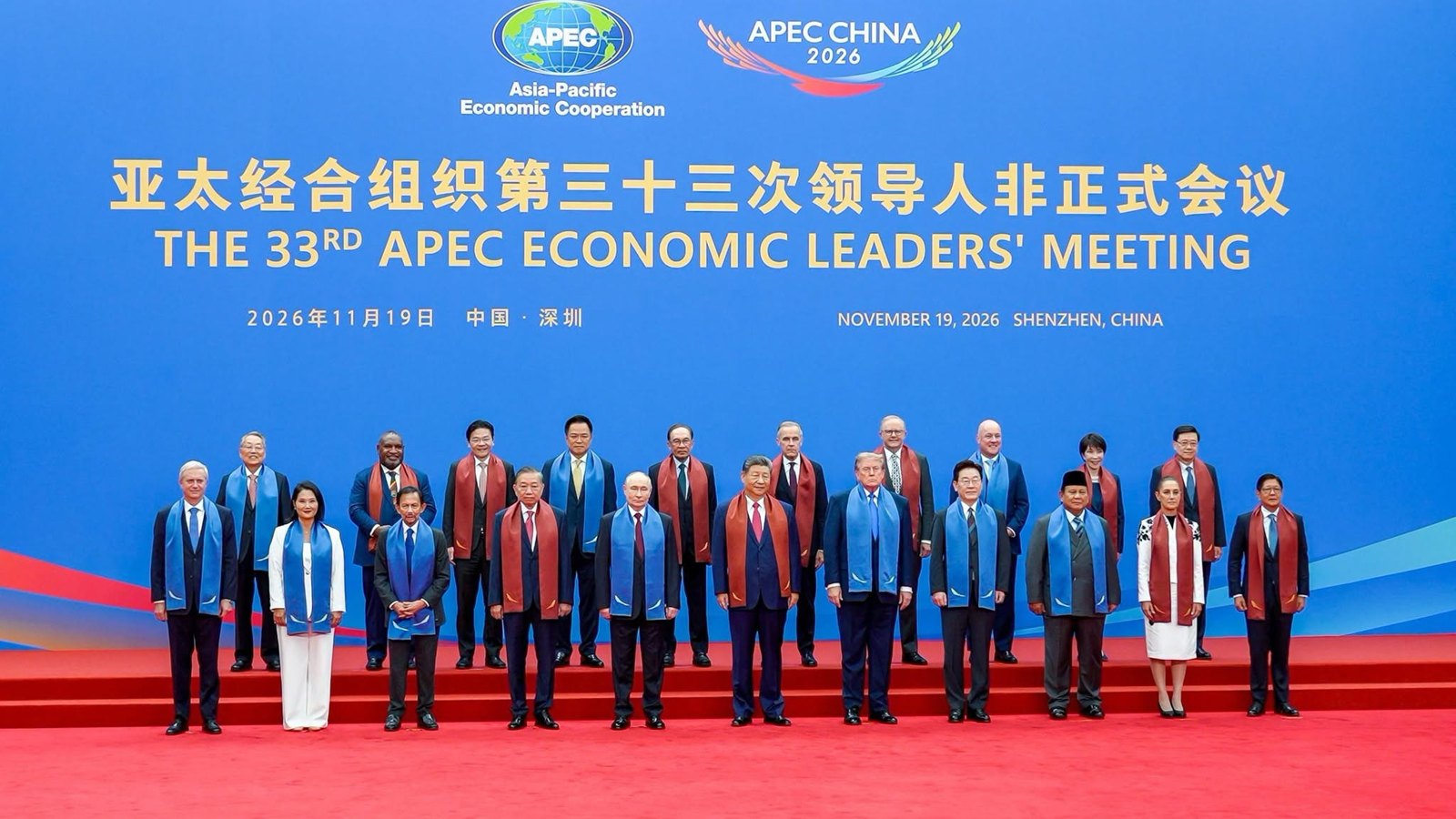
President Trump, China’s Xi Jinping and Russia’s Vladimir Putin met in Shenzhen on Thursday, Nov. 19, on the sidelines of the APEC summit, the first meeting of the three leaders together. Afterward, Chinese state media published a four-point “Heads of State Declaration toward Peace” (Xinhua, full text).
Update, Nov. 23: one answer, two halves
- What Clayton said: On ABC’s “This Week” Sunday, Jonathan Karl asked whether Putin is America’s friend. Clayton first described the summit as “the three main nuclear powers getting together and saying, we cannot have a nuclear incident,” and said, “In that circle of that conversation, using the term ‘friend’ is entirely appropriate.” Pressed again, he said, “He is not America’s friend in Ukraine. Not at all. Not at all” (ABC transcript).
- The other side on the same show: Rahm Emanuel, the former Chicago mayor, said limiting it to Ukraine was “not an accurate answer,” and that Putin is not America’s friend in the Middle East, the Indo-Pacific or Europe (same transcript).
- The headline count: Of 36 headlines in a Google News search, 19 led with “not America’s friend” and 15 with “entirely appropriate” or Clayton defending or trusting Trump; 2 carried both. Four of the 19 dropped “in Ukraine”; RadarOnline’s was “Trump’s Intelligence Director Declared Putin Is ‘Not America’s Friend.’”
- The outliers: Mediaite ran “DNI Jay Clayton Rejects Trump Saying Putin is a ‘Friend’,” though Clayton called Trump’s use of the word “entirely appropriate.” The Daily Mail said he “squirms.” Both are characterizations, not quotes.
- Google’s placement: Google News’s U.S. section carried the Washington Post’s “Putin is ‘not America’s friend in Ukraine,’ DNI Jay Clayton says” at No. 9. It’s an accurate quote that leads with one half of the answer.
Questions for this update
- Which outlets ran both halves of Clayton’s answer in the headline, and why did most choose one?
- Did any outlet ask the White House whether Trump agrees with Clayton’s “in Ukraine” line?
How we counted: Google News search (signed out, U.S. edition) the morning of Monday, Nov. 23, about 6:45 a.m. ET, past two days, duplicates removed by outlet and title; frames sorted by keywords in the headline (a headline can fall in more than one group). Section placement is from Google News’s Top, U.S., World and Business RSS feeds and Yahoo News’s RSS and front page, fetched 6:37–6:41 a.m. ET. X figures were read about 6:45 a.m. ET.
Update, Nov. 21: “I can’t speak to America”
At his White House news conference on Friday, Nov. 20, CNN’s Kaitlan Collins asked: “While you were there, you said Putin is your friend. Russia, of course, is Iran’s biggest ally. Do you believe Putin is a friend to America?” Trump answered: “I can’t speak to America. I’ve been dealing with Putin during the fake ‘Russia, Russia, Russia’ hoax.” He went on: “I have a fantastic relationships with Putin. That’s a very good thing. I have fantastic relationships with President Xi. That’s a good thing. And our country’s safe because of that” (transcript excerpt via Mediaite; AP).
How we counted: Google News search (signed out, U.S. edition) the morning of Saturday, Nov. 21, about 6:40 a.m. ET, past day, duplicates removed by outlet and title; frames sorted by keywords in the headline. Google News section placement is from its Top, U.S. and World RSS feeds fetched about 6:39 a.m. ET. Search: “Trump Putin friend” (92 headlines).
Of 92 headlines, 29 led with Ukrainian President Volodymyr Zelensky’s reply that Putin is “a killer,” 24 said Trump defended or lauded the relationship, 18 said he “can’t speak to” or would not say whether Putin is America’s friend, and 11 used backlash, slam, grilled or embarrassed. Five set the remark next to Russian strikes, among them the Daily Mail’s “Missiles hit Poland hours after Trump defended Putin.” HuffPost quoted his words accurately: “Trump Insists Putin Is His ‘Friend,’ But Admits He ‘Can’t Speak To America.’” The New Republic went further, as news: “Trump Admits He Only Cares If Putin Is His Friend, Not America’s” — an inference his answer does not state. The one Republican voice in the headlines, Sen. Mike Lee calling the remark “a masterstroke,” ran as “gushes” (Mediaite, Yahoo). TMZ carried Trump’s own reason: “Says It Keeps America Safe.”
Google News’s section placement was straighter: CBS’s “Trump touts Asia deals and meeting with Xi and Putin at White House press conference” ran in Top (#3) and World (#5), and PBS’s “After calling Putin his friend, Trump ‘can’t speak to’ whether Putin is a friend to America” in U.S. (#17).
Balance: 4 outliers against the administration (The New Republic, Daily Mail, The Daily Beast’s “Embarrassing Putin Claim,” Mediaite’s “‘Crazy’ Moment”); none the other way.
Questions for this update
- Did “I can’t speak to America” mean he would not speak for the country, or that he was declining the question? No outlet we saw reported a follow-up.
- What, concretely, does Trump say the relationship has produced? He cited safety and nuclear weight; the summit declaration names no Ukraine terms.
Update, Nov. 20: the “asleep” claim
Early Thursday, Nov. 19, Newsweek posted: “Video appears to show Donald Trump falling asleep at the APEC summit in China as Xi Jinping spoke about global trade” (Newsweek on X, 2:49 a.m. ET). White House communications director Steven Cheung, the president’s own spokesman, quoted it about five hours later: “Fake News! President Trump was looking at papers in front of him while the speaker made remarks. You can clearly see his eyes move back and forth” (Cheung on X). We have not judged the video ourselves; both accounts are attributed.
How we counted: Google News search (signed out, U.S. edition) the morning of Friday, Nov. 20, about 6:40–6:50 a.m. ET, past day, duplicates removed by outlet and title; frames sorted by keywords in the headline. Google News section placement is from its Top, U.S. and World RSS feeds fetched about 6:36 a.m. ET. Search: “Trump asleep APEC.”
Of 30 headlines on the claim, 21 ran it without the White House’s answer, and several stated it as fact: “Trump Dozes During Xi’s APEC Speech” (Chosun Ilbo), “Donald Trump Falls Asleep During APEC Conference” (Yahoo), “Trump Falls Asleep on Camera” (MeidasTouch). HuffPost led with a quote word: “‘Embarrassing’: Trump Appears To Fall Asleep While Xi Speaks.” Seven carried the denial straight, among them People’s “White House Says Trump Was Reading Papers When He Appeared to Sleep in Summit,” and two mocked it: The Daily Beast’s “White House Goon Melts Down After Trump Busted Sleeping” and Raw Story’s “White House spins out.”
The day-two Google News placement was otherwise mostly analysis: PBS’s “3 takeaways from Trump, Xi and Putin’s historic summit” led Top stories, and CNN’s “For Xi and Putin, the Trump trilateral was a win for a new world order” led World. Yahoo News’s lead was “Russia fires 100 missiles at Ukraine hours after Trump talks peace with Putin.”
What X users are checking
- Newsweek’s post had about 289,000 views, 580 replies and 459 likes when we checked at about 6:40 a.m. ET Friday: more replies than likes, the usual sign of a ratio.
- Cheung’s rebuttal had about 297,000 views and 5,300 likes. Cheung speaks for the White House, so his post is the subject’s answer, not an independent check.
Questions for day two
- Did Newsweek add the White House’s explanation to its post or article?
- Is there a second camera angle or full-session video that settles whether Trump was reading?
What the record shows
- U.N. reform: as permanent Security Council members, the three “committed to reform the U.N.” so it can respond “more effectively to global challenges” (Xinhua text).
- Fuel: the three countries “plan to increase the production and supply of refined petroleum products” and “reaffirmed the importance of stable energy flows.”
- International courts: they “concurred that the International Criminal Court and other similar bodies must not abuse their jurisdiction.”
- Nuclear weapons: they “reaffirmed that a nuclear war cannot be won and must never be fought” and will “conduct a dialogue on reducing nuclear risks and preventing the proliferation of nuclear weapons.”
- What it leaves out: AP reported that the declaration “did not mention the wars in Ukraine or Iran,” which Trump said he raised earlier in the day; AP attributed the agreement to Russian officials and Chinese state media (AP). We did not find a White House text of the declaration as of 7 a.m. ET.
How the legacy media framed it
How we counted: Google News search (signed out, U.S. edition) the morning of Thursday, Nov. 19, about 6:45–7:00 a.m. ET, duplicates removed by outlet and title; frames sorted by keywords in the headline. Google News section placement is from its Top and World RSS feeds fetched at 6:39 a.m. ET.
The straight reporting led. Of 100 headlines, 29 called the meeting historic, rare, unprecedented, first-ever or a milestone, and 46 mentioned nuclear arms, mostly Trump’s push for talks. AP, Reuters, CBS, CNN, NBC and the Wall Street Journal ran plain accounts of who met and what was discussed. Fox News, generally friendly to the administration, ran “historic … diplomatic milestone, but breakthroughs remain elusive.”
Google News’s lead cluster in its Top and World sections, though, had five headlines, and two were skeptical takes rather than accounts of the meeting: Bloomberg’s “Trump, Xi and Putin’s Historic Trilateral Evokes Images of Yalta and Beyond” and The Washington Post’s “Trump calls Putin and Xi friends. They have other plans.” The Yalta comparison was itself disputed in the legacy press: The New York Times ran “It Won’t Be Like Yalta” and Al Jazeera “will not be a ‘new Yalta.’” In the wider search, the Post also ran “Conflicting agendas and a weakened Trump mark historic three-way summit,” stating “weakened” as fact, and Politico led with an unnamed ally’s “‘An absolute nightmare.’” By our count, 4 outlier headlines cut against the administration and none against its critics; the rest of the pack was straight.
What questions the legacy media missed
- Has the White House published or confirmed the declaration’s text, and does the U.S. read the court and U.N.-reform language the way Beijing and Moscow do?
- What, specifically, did the three leaders say about Ukraine and Iran, which the declaration omits?
- What would a three-way nuclear “dialogue” look like in practice, and who would lead it?
How outlets framed it
Outlet headlines — their words, not ours.
- CBS News (Google Top #1 lead): “Trump, Xi, Putin begin rare joint meeting in China”
- Bloomberg (Google Top and World #1 cluster): “Trump, Xi and Putin’s Historic Trilateral Evokes Images of Yalta and Beyond”
- The Washington Post (Google Top and World #1 cluster): “Trump calls Putin and Xi friends. They have other plans.”
- AP: “China and Russia say they and US agree on UN reforms, boosting fuel supplies, dialogue on nuclear”
- WSJ: “Trump Says ‘We Are Really Making History’ at First-Ever Summit With Xi, Putin”
- Reuters: “Trump, Xi, Putin conclude historic meeting on Ukraine war, nuclear arms”
- NBC News: “Trump pushes for three-way nuclear deal as Russia and China show little interest”
- The Washington Post: “Conflicting agendas and a weakened Trump mark historic three-way summit”
- Politico: “‘An absolute nightmare’ — Trump’s trilateral with Xi and Putin spooks allies”
- Fox News: “Trump’s historic summit with Xi, Putin marks diplomatic milestone, but breakthroughs remain elusive”
- The New York Times: “Trump, Xi and Putin Will Sit Down for the First Time. It Won’t Be Like Yalta.”
- The Hill: “Republicans back Trump, Xi, Putin meeting but warn they are ‘not our friends’”